



Dutch Elm Disease Assessment in Winnipeg is essential work in a city that holds the largest urban American elm canopy left in North America. Winnipeg has fought Dutch elm disease since 1975, and today hundreds of mature elms still arch over older streets, river lots and residential neighbourhoods across the area. Our ISA Certified Arborists inspect your elm, explain what the visible signs actually mean, identify whether the tree can be saved or must be removed, and walk you through the legal requirements that apply. We work throughout Winnipeg and the surrounding municipalities, including West St. Paul, East St. Paul, Springfield and beyond. A professional assessment takes the guesswork out of a costly decision and protects your property.
Why Dutch Elm Disease Assessment Matters in Winnipeg
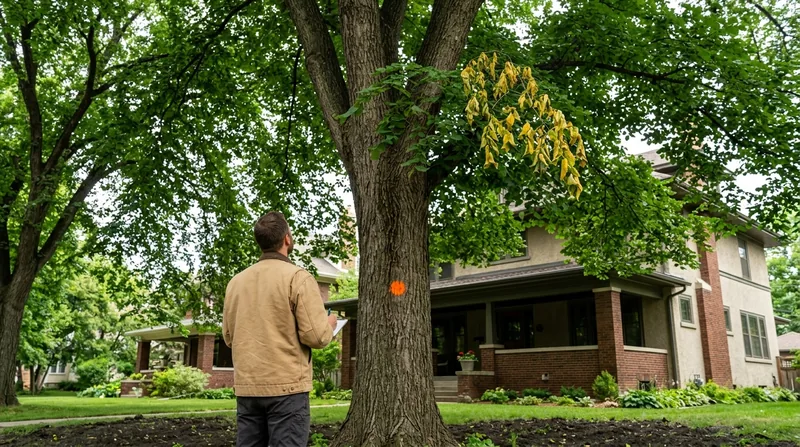
Dutch elm disease is spread by bark beetles and root grafts between trees. Once a tree is infected, the fungus clogs the water-conducting vessels, and the elm begins to wilt from the inside out. Early detection can mean the difference between saving a mature tree and losing it. Many homeowners mistake the first signs (wilting on one branch, yellowing leaves) for drought stress or a minor pest problem, when in fact the tree may already be in decline. A certified assessment tells you exactly what you are dealing with and what the law requires next.
- Inspect the crown for wilting, yellowing or dieback on individual branches.
- Check the sapwood under the bark for the telltale brown discolouration of Dutch elm disease.
- Assess overall tree health, structural soundness and risk to nearby structures.
- Explain the provincial elm pruning ban (April 1 to July 31) and elm wood disposal rules.
- Recommend whether the tree can be treated, pruned to extend its life or must be removed.
Once we have inspected your elm, you will know exactly what action is needed and what the rules require. That clarity lets you make a confident decision and move forward without delay.
Local context: The City of Winnipeg manages trees on public boulevards and parks, but for a private elm on your property, there is generally no permit required. However, elm pruning is banned from April 1 to July 31 across all of in Winnipeg and the surrounding area, and elm wood must be disposed of according to provincial rules. We check the specific requirements for your address and ensure full compliance.
How We Assess Your Elm in the Winnipeg Area
Our assessment process is straightforward and thorough. We arrive with the tools and expertise to look inside the tree, not just at its surface. We inspect the sapwood, examine the crown structure, photograph signs of disease, and document everything. Once we have finished, we sit down with you and explain what we found in plain language. No jargon, no false hope, no pressure. You will know exactly what your elm is facing and what your options are.
- Climb or use a lift to inspect the upper crown and branches up close.
- Take a cross-section of a twig or small branch to check for brown discolouration in the sapwood.
- Measure the tree, assess its structural integrity and check for cavities or decay.
- Document all findings with photographs and notes for your records.
- Discuss treatment, pruning or removal options based on what we find.
The entire process typically takes 30 to 60 minutes, depending on the size and condition of the tree. Once we have finished, you will have a clear picture of the tree's health and know exactly what needs to happen next. For more details on tree removal, see our tree removal service.
Example: A homeowner in St. James noticed yellowing leaves on the south side of a 40-year-old American elm. We assessed the tree, found early Dutch elm disease in the sapwood, and recommended pruning out the infected branches immediately (outside the April 1 to July 31 ban) to slow the spread. The tree survived and is still standing three years later.
Assessment Methods and What Each Tells Us
| Method | What It Shows | When We Use It |
|---|---|---|
| Crown inspection and branch sampling | Wilting, yellowing, dieback and sapwood discolouration that confirms or rules out Dutch elm disease. | Every assessment; the most reliable visual indicator. |
| Structural assessment | Cracks, cavities, decay and lean that tell us whether the tree is safe to keep or must be removed. | When the tree is diseased or showing signs of weakness. |
| Proximity to structures and utilities | Distance to your house, garage, fence, power lines or neighbour's property. | Always, to assess risk and removal feasibility. |
| Photographic documentation | A dated record of the tree's condition for your insurance, your records or future reference. | Upon request or when removal is likely. |
What the Law Requires for Elm in Winnipeg Neighbourhoods
Elm is a special case in in Winnipeg and the surrounding area. The provincial elm pruning ban runs from April 1 to July 31 every year, and elm wood must be chipped or disposed of according to provincial rules to prevent the spread of bark beetles that carry Dutch elm disease. If your assessment shows that the tree must be removed, we handle the entire disposal process for you. We also check whether the City of Winnipeg has any specific requirements for your address, though most private elms do not require a municipal permit. Our arborists know the rules inside out and make sure your work is fully compliant.
If the assessment shows that the elm can be saved through pruning, we can schedule that work outside the April 1 to July 31 ban, typically in late fall or winter when the tree is dormant. This timing also reduces stress on the tree and improves healing. For infected wood that must be removed, we arrange proper chipping or disposal under provincial rules. See our elm removal and wood disposal service for full details.
When to Schedule an Assessment Across the Winnipeg Area
You should request a Dutch Elm Disease Assessment as soon as you notice wilting, yellowing or dieback on an elm tree, regardless of the season. If we find disease, we can plan the next steps during the appropriate window. Spring and early summer are peak seasons for visible symptoms because the tree is actively growing and the disease is moving through the vascular system. However, we assess elms year-round because the decision to remove an infected tree often cannot wait until winter. For elms that are safe but need preventive pruning, we schedule that work in late fall or winter, outside the April 1 to July 31 ban.
Do not wait if you see signs of decline. The sooner we assess your elm, the sooner you will know whether it can be saved. Contact us at (431) 441-0851 for a free estimate or visit our service areas page to confirm we work in your neighbourhood.
Why Choose Red River Tree Trimming for Your Elm Assessment
We have been working in Winnipeg since 2014, and we know the elms in this city. Our crew includes ISA Certified Arborists who have assessed hundreds of elms across Winnipeg, West St. Paul, Selkirk, Stonewall and the surrounding area. We are fully insured, we respect the provincial elm pruning ban and disposal rules, and we document everything so you have a clear record. We do not rush assessments and we do not pressure you into removal if the tree can be saved. Our job is to tell you the truth about your elm and help you make the right decision.
Call us today at (431) 441-0851 or request a free estimate online. We will schedule a time that works for you and arrive ready to give your elm a thorough, professional assessment.
Prices Dutch Elm Disease Assessment in Winnipeg — Indicative pricing
| Service | Price | Details |
|---|---|---|
| Dutch Elm Disease Assessment (single tree, up to 15 metres) | From $275 | Crown inspection, sapwood sampling, structural assessment, and written findings |
| Multiple elms or larger trees (15+ metres) | From $375 | Assessment of each tree plus recommendations for management or removal |
| Elm removal (if assessment confirms disease) | From $550 | Cutting, chipping and disposal under provincial elm wood rules |
| Preventive elm pruning (outside ban period) | From $350 | Removal of infected or dead branches to extend tree life |
| Free estimate | No charge | Response within 24 hours at (431) 441-0851 |
Indicative prices; free, personalized estimate within 24h at (431) 441-0851.